
Sharing the Turf: Bilateral Dynamics Ahead of the 2026 World Cup
Two perspectives


I’d like my World Cup Soccer without ICE, please
By Amanda Mattingly
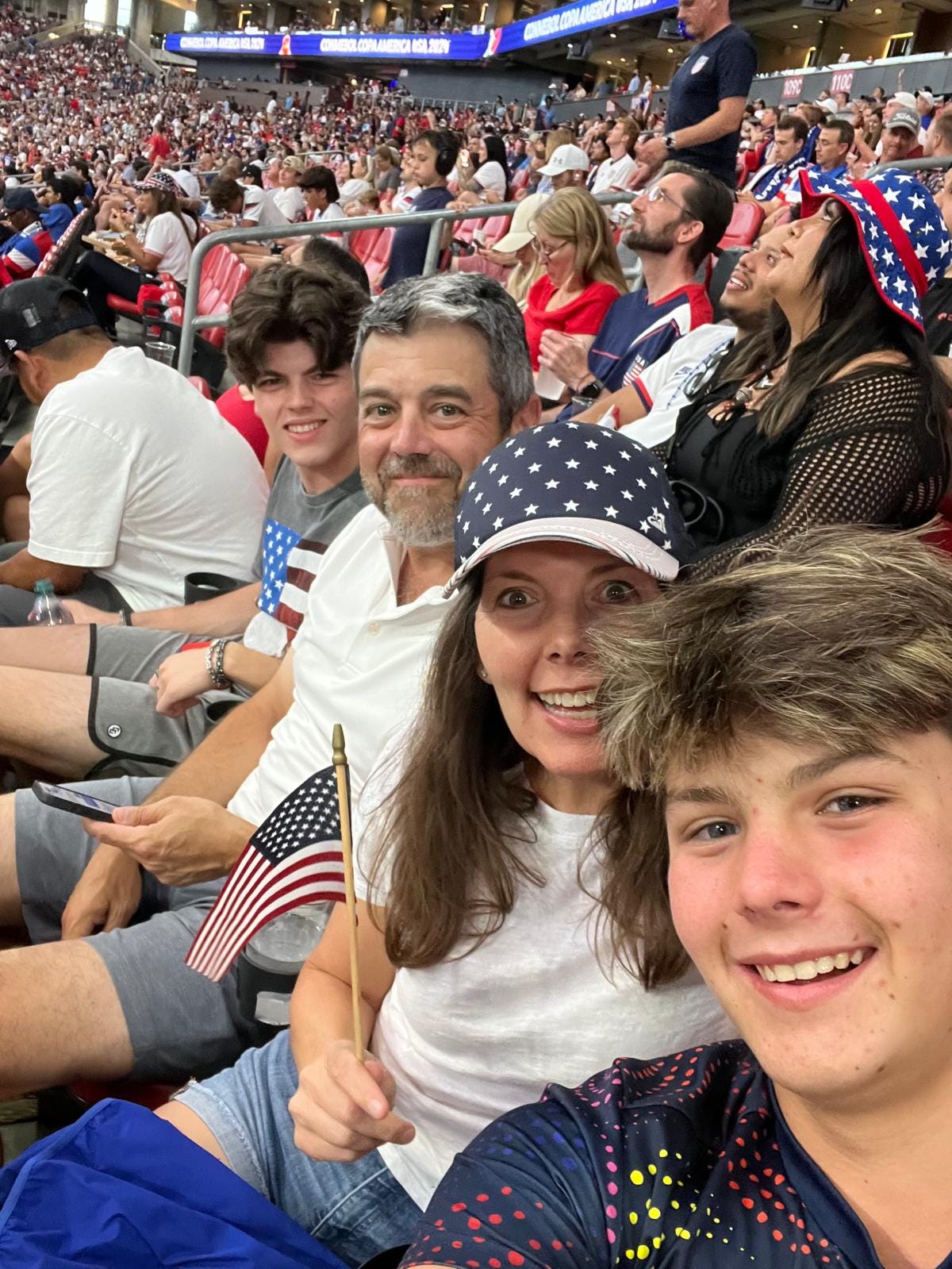
World Cup Soccer is supposed to be a joyous coming together of nations to compete in “the beautiful game,” not for Club but for Country. Like the Winter Olympics taking place in Italy this month, the World Cup games bring the international community together to compete against other top talent, to cheer on your national team, and if you’re lucky, to celebrate.
FIFA’s World Cup is also the pinnacle of “sports diplomacy.” In this sense, countries host or attend sporting events and the exchange of athletes as a form of “soft power” designed to forge relationships, build trust, and promote dialogue among nations in a way that is above, or at least outside, the normal bilateral and multilateral government-to-government relations. Think about it as an opportunity for countries to earn good will as well as exert influence.
For the World Cup, countries vie against one another to host the games every four years. As such, the World Cup is a money maker, a cultural platform, and a stage for the host countries. Qatar spent and made billions from hosting the 2022 World Cup, literally putting the Middle Eastern country on the map for many people. The World Cup provides a great opportunity to invite the rest of the world to your home and brag about what makes your country great. When the United States, Mexico, and Canada won their “United Bid” in 2018 for the 2026 World Cup games, this kind of “sports diplomacy” is what many people envisioned not just for one country, but for three.
Mexico and Canada may seize the opportunity, but it’s less clear if the United States will be so welcoming.
Under the Trump administration, the United States has instituted an expansive travel ban first announced last June and expanded in December 2025, which places restrictions on individuals traveling to the United States. Thirty-eight countries are impacted by a full travel ban or partial restrictions on US travel now. The travel ban is part of President Trump’s larger immigration strategy, which in 2025 saw over 605,000 deportations and approximately 1.9 million self-deportations or voluntary removals. With 78 of the 104 World Cup matches in the United States, the travel ban and deportations will impact World Cup fans too.
Further, the acting Director for US Immigration and Customs Enforcement (ICE), Todd Lyons, told Congress last week that ICE agents will play a “key part” in the World Cup this summer. ICE has become the tip of the spear for Trump’s most aggressive immigration action and harshly criticized by many Americans since the fatal shooting of two American citizens by ICE in Minneapolis this year. The presence of ICE in the cities where the World Cup games are played in the United States will have a chilling impact on the event. With millions of fans from around the world coming for the games, many have raised concerns about ICE’s presence.
In Atlanta where I live, Mayor Andre Dickens acknowledged that ICE might be in the city during the eight games planned for Atlanta beginning in June. Atlanta has five group stage matches and three later in the tournament. Mayor Dickens said, “I can’t predict what a federal government will attempt to do at 11 sites of World Cup matches across the United States … We hope that their presence will be small, unnoticeable, negligible, invisible – and maybe nonexistent.”
The 2026 World Cup should be a celebration for the United States, Mexico, and Canada as hosts and for fans from around the world. It should be a time for North America to demonstrate its economic and political alliance. It should be an opportunity to practice strategic “sports diplomacy” and to use the World Cup as an opportunity to build bridges not walls.
So I’m with Mayor Dickens. I’d like my World Cup Soccer without ICE, please.
Five Months’ Wages for Ninety Minutes
By Rodrigo Abud
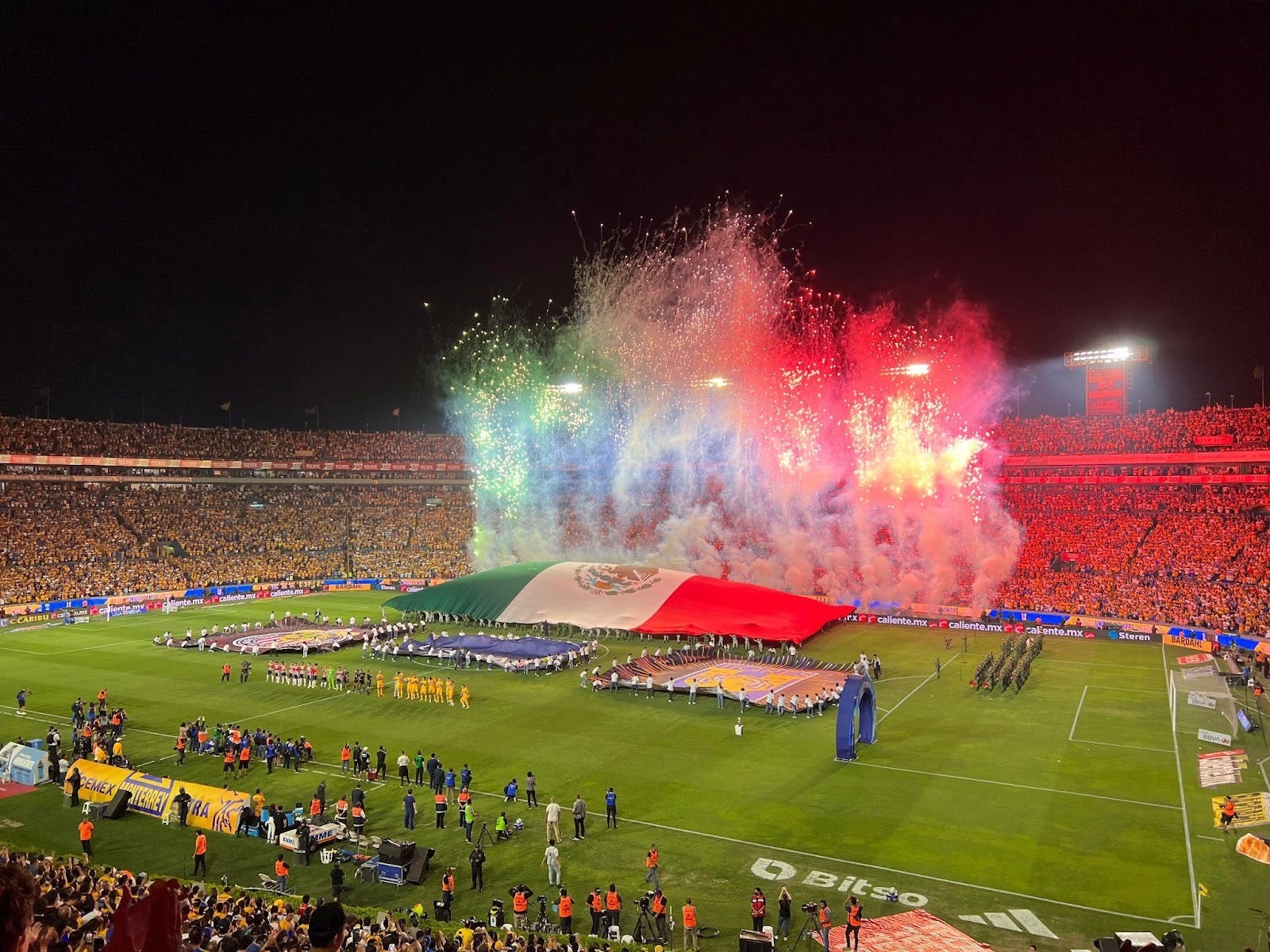
The teams I have rooted for have been shaped by where life has taken me. As a kid growing up in Morelia, I celebrated my hometown club’s 2001 championship, shifted to Tigres when I moved to Monterrey, and now living in Cambridge, I’ve embraced American sports like the NFL, baseball, and basketball. American sports are deeply embedded in Mexican culture, with the NFL alone attracting over 30 million Mexican viewers each season. Soccer, however, did not experience the same cross-border commercial integration until recently. But as the 2026 World Cup approaches - the first to be co-hosted across our border - I find myself thinking about how much has changed since 1994.
That year, the U.S. hosted its first World Cup while NAFTA came into force. Total trade between our countries was US$81 billion, a fraction of today’s US$800+ billion, which now makes Mexico the United States’ top trading partner. MLS had just been created but had not yet begun to play. Messi was a child. Mexico’s Primera División was the undisputed regional powerhouse.
Fast forward to 2026. Donald Trump is now President and Mexico’s political hegemony has shifted to MORENA. MLS is now a multi-billion-dollar league. Mexican and U.S. teams play together in the “Leagues Cup”, which this year enters its fourth season. Messi is nearing the end of his career. The experience of watching the sport today bears little resemblance to what it was thirty years ago.
At the same time, the USMCA is up for review in a moment marked by tariff threats and security-driven politics. The World Cup will unfold in a far more polarized environment than NAFTA’s birth.
World Cup pricing exposes those asymmetries clearly. For the match between Mexico vs. South Africa, the cheapest resale ticket sits around US$2,900. For a Mexican worker earning minimum wage, roughly US$420 per month, that represents close to five months of income. For an American worker earning minimum wage, roughly US$1,160 per month, it's about two and a half months of work. Same experience, but one person sacrifices five months of income while the other sacrifices half that amount.
Having attended World Cups in South Africa and Russia, I have seen firsthand the extraordinary financial commitments many Mexican fans make to follow their national team. The devotion is undeniable, but so is the economic strain.
Soccer compresses structural asymmetries into ninety minutes. Eleven against eleven. One scoreboard. No GDP, no tariffs, no trade deficits. Just a result. For a Mexican fan, a victory over the United States or outperforming your northern neighbour can feel like restoration. We may be burdened by corruption and inequality, but on the field, none of that matters. The balance of power may favor one country off the field. On the field, it can flip in an instant.
This dynamic will undoubtedly surface during the 2026 World Cup. But I don’t think it has to define the experience. There are other forces at play: shared excitement, cross-border cooperation, the fact that millions of Mexicans and Americans will be watching the same matches. Between June and July, Mexico, Canada, and the United States will co-host 104 matches. The question is which narrative takes hold: the one that turns every match into a proxy for historical grievances, or the one that recognizes soccer as something we can genuinely share.
Perhaps nothing brings us together as Mexicans more than sharing a World Cup stage with the United States. For the first time, we’ll be both organizing and competing.